Mahjong Tiles Explained: Every Tile and What It Means
A guide to every tile in a Chinese Mahjong set: the three suits, how to read the characters, winds and dragons, flowers, seasons and animals, and which tiles make which sets.
Every Mahjong set is built from the same few families of tiles: three numbered suits, the winds and dragons, and a handful of bonus tiles. Once you can read the Chinese on the faces, you can sit at any table. This page shows every tile, what it is called, how many there are, and what each one can do in a hand.

How many tiles are in a Mahjong set?
The core of the set is 136 tiles. There are three suits with nine ranks each, and four copies of every rank, which makes 108 suit tiles. Add the seven honour tiles (four winds and three dragons), again four copies of each, for another 28.
Most Chinese sets then add eight bonus tiles, one of each flower and season, for 144 tiles. Singapore and Malaysian tables add four animal tiles as well, so their sets have 148.
| Tile type | Different tiles | Copies of each | Total |
|---|---|---|---|
| Characters | 9 | 4 | 36 |
| Bamboo | 9 | 4 | 36 |
| Dots | 9 | 4 | 36 |
| Winds | 4 | 4 | 16 |
| Dragons | 3 | 4 | 12 |
| Flowers | 4 | 1 | 4 |
| Seasons | 4 | 1 | 4 |
| Animals (Singapore and Malaysia) | 4 | 1 | 4 |
American Mahjong uses a different set of 152 tiles that includes jokers and plays by a yearly card of hands. See how to play American Mahjong for that game. The rest of this page covers the Chinese set.
The three suits
The suit tiles are numbered 1 to 9. Runs, triplets and most of the hand come from these 108 tiles.
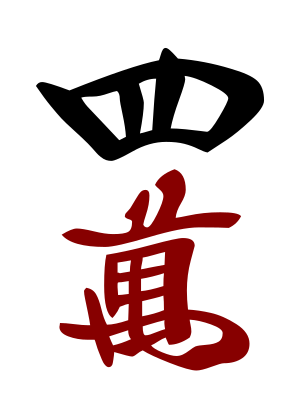
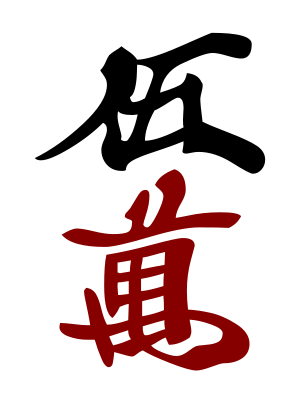
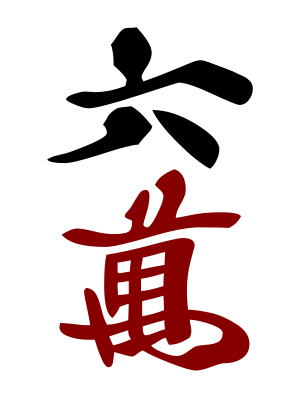
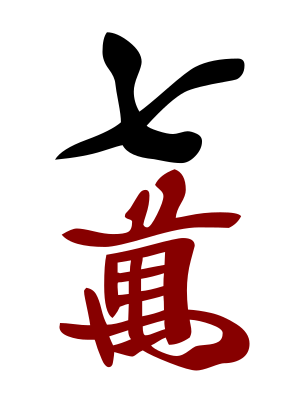
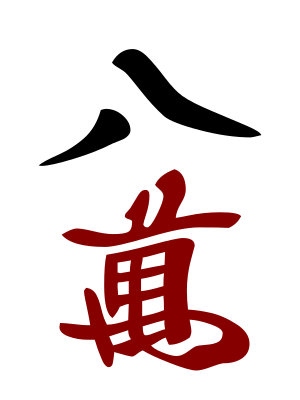
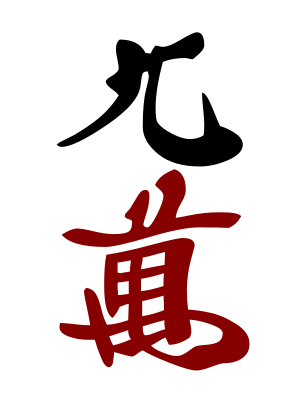
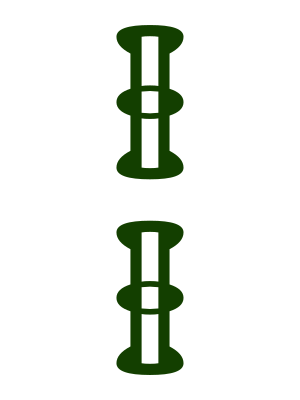
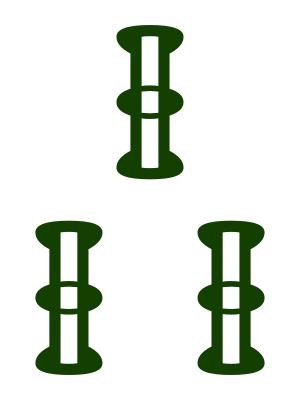
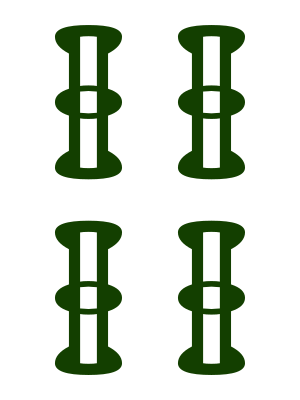
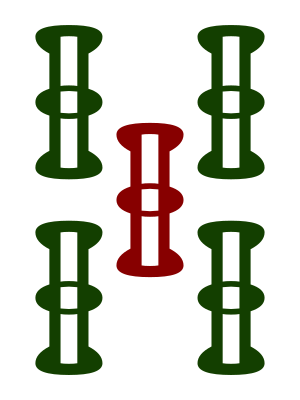
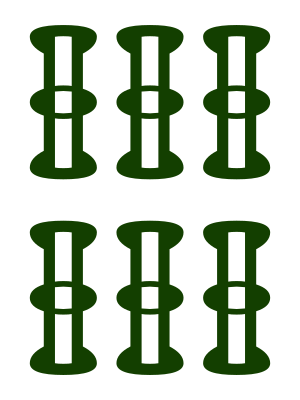
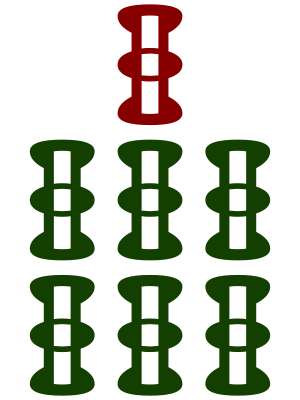

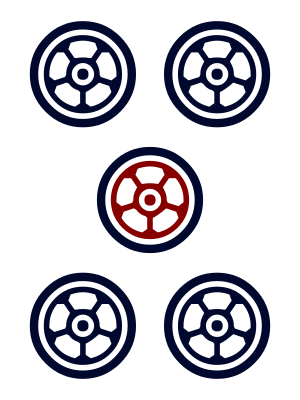
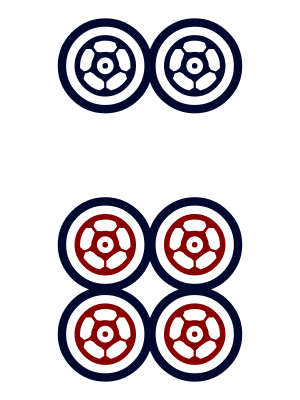
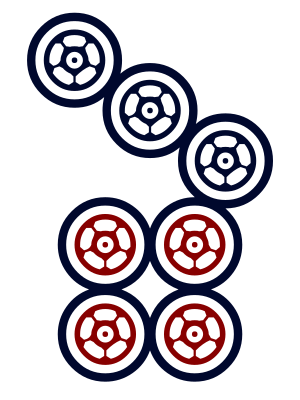
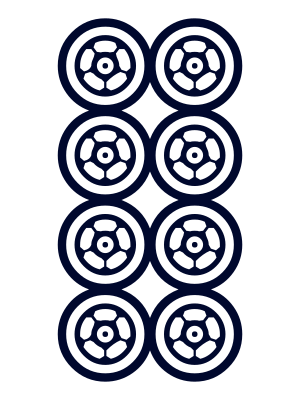
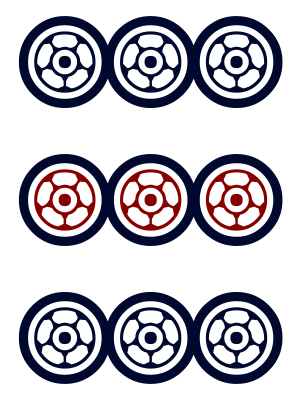
Bamboo and dots are easy to read because you count the sticks or circles. Characters take a little practice, so they get their own section below.
How to read the character tiles
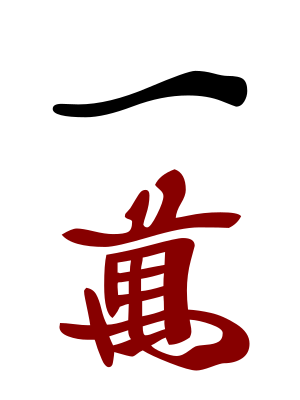
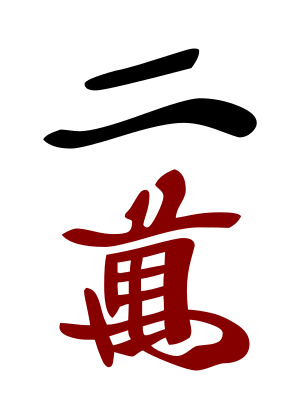
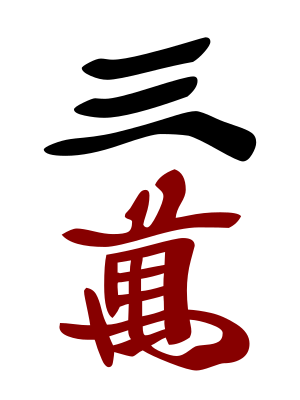
Every character tile has the red 萬 (wan) at the bottom and a Chinese numeral above it. Learn the nine numerals and you can read the whole suit.
| Rank | Numeral | Cantonese | Mandarin |
|---|---|---|---|
| 1 | 一 | yat | yī |
| 2 | 二 | yi | èr |
| 3 | 三 | saam | sān |
| 4 | 四 | sei | sì |
| 5 | 五 | ng | wǔ |
| 6 | 六 | luk | liù |
| 7 | 七 | chat | qī |
| 8 | 八 | baat | bā |
| 9 | 九 | gau | jiǔ |
One, two and three are just one, two and three strokes. Four (四) looks like a box, and eight (八) looks like two legs. Some sets also print a small Arabic numeral in the corner, which helps while you learn.
Winds and dragons
The honour tiles have no numbers. There are four winds and three dragons, with four copies of each.
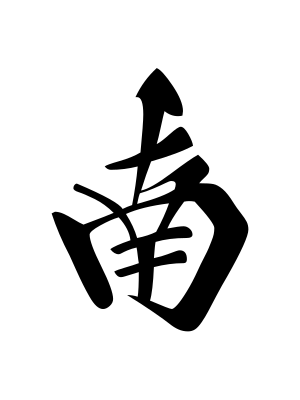
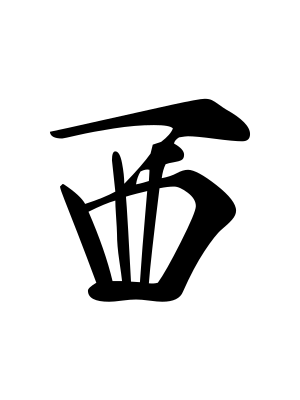
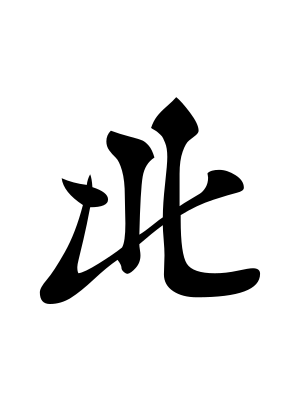
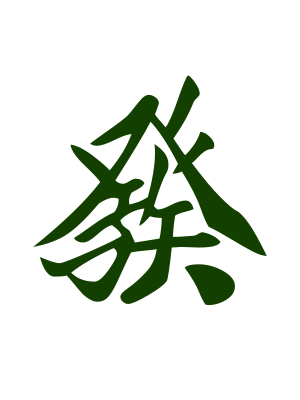
Because they have no numbers, winds and dragons can never make a run. They can only make triplets, kongs and pairs. A triplet of any dragon scores in most rules.
Terminals and honours
The 1s and 9s of each suit are called terminals. Together with the seven honour tiles they make 13 different tiles, and they matter for a few special hands. The best known is thirteen orphans, which needs one of each of these 13 tiles plus a second copy of any one of them.
The ranks 2 to 8 are called simples. Hands built only from simples, or only from terminals and honours, score extra in some rules.
Flowers, seasons and animals
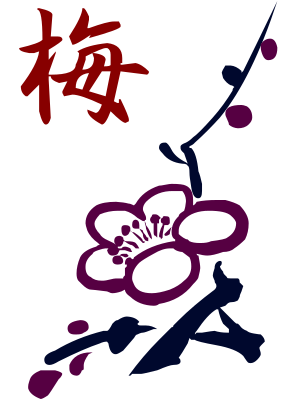
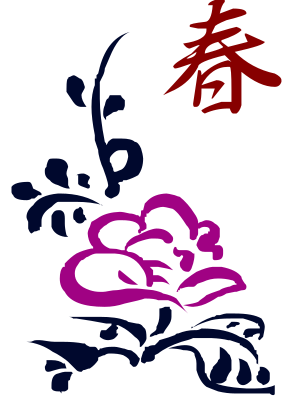
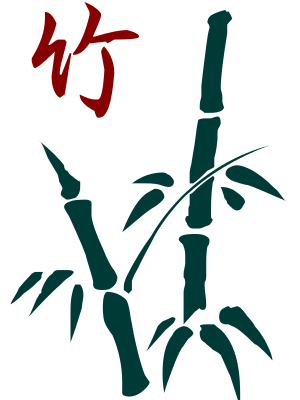
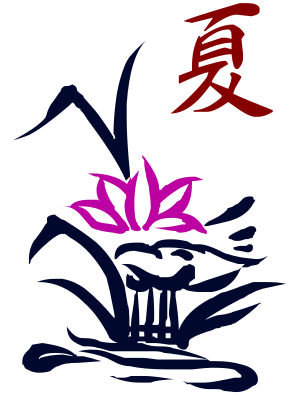
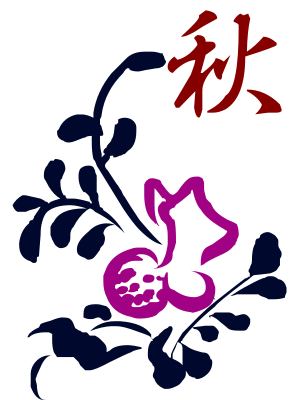
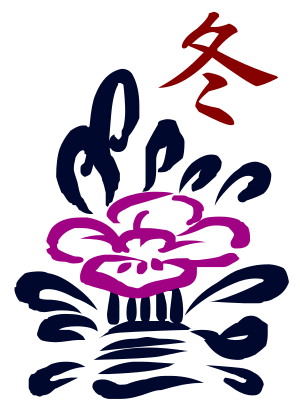
The bonus tiles are not part of your hand. When you draw one, you put it face up beside your tiles and draw a replacement, so your hand stays the same size. There is only one of each bonus tile.
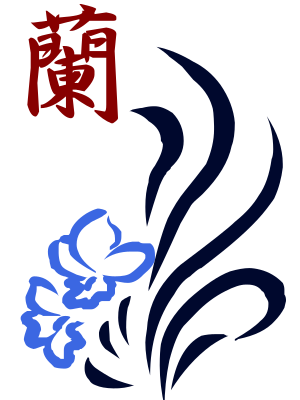
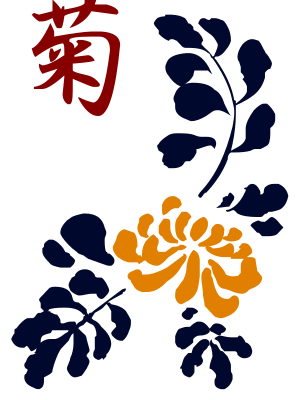
| Seat | Number | Flower | Season |
|---|---|---|---|
| East | 1 | Plum | Spring |
| South | 2 | Orchid | Summer |
| West | 3 | Chrysanthemum | Autumn |
| North | 4 | Bamboo | Winter |
With regional scoring on, the flower and season that match your seat count for you. Hong Kong scoring gives 1 faan for each one, an extra faan for collecting all four flowers or all four seasons, and 1 faan for a hand with no bonus tiles at all. Taiwanese scoring gives 1 tai for each seat flower and 2 tai for a full set of four.
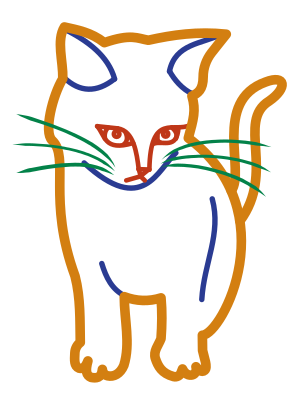

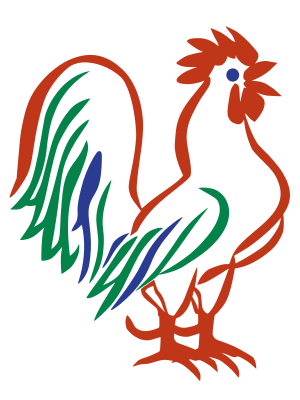
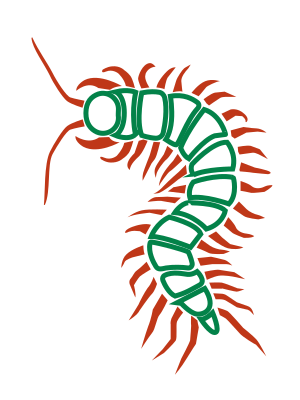
In Singapore and Malaysian scoring, every animal you hold scores 1 tai (1 fan in Malaysia), and holding all four adds 1 more. Seat flowers and complete flower or season sets also score there.
Which tiles can make which sets
A winning hand is usually four sets and a pair. What a tile can join depends on its family.
| Tile | Run (chow) | Triplet (pung) | Kong | Pair |
|---|---|---|---|---|
| Characters, bamboo, dots | Yes | Yes | Yes | Yes |
| Winds | No | Yes | Yes | Yes |
| Dragons | No | Yes | Yes | Yes |
| Flowers, seasons, animals | No | No | No | No |
A run is three consecutive ranks in one suit, such as 3, 4 and 5 of dots. It cannot wrap around from 9 to 1, and it cannot mix suits.
How many tiles are in a Mahjong set?
A Chinese set has 144 tiles: 136 suit and honour tiles plus 8 flowers and seasons. Singapore and Malaysian sets add 4 animals for 148. American Mahjong uses 152 tiles, including jokers.
What are the flower tiles for?
They are bonus tiles. You set each one aside when you draw it and take a replacement. With regional scoring, the flower and season that match your seat number add to the value of your win.
What does the blank tile mean?
The blank tile, or a tile with an empty frame, is the white dragon (白). It is a normal honour tile with four copies and can make triplets and pairs. Some sets include extra blanks as spares in case a tile is lost.
What are the Chinese characters on Mahjong tiles?
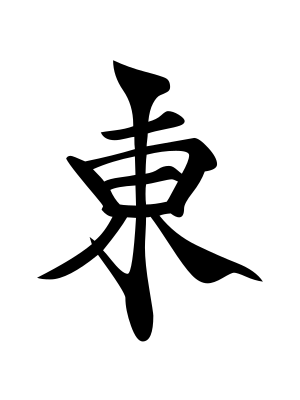
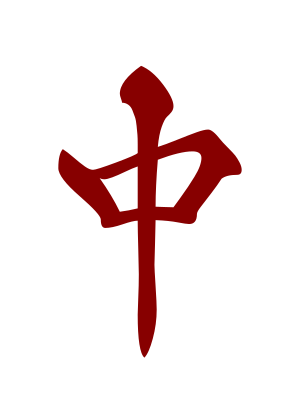
On the characters suit, the top character is a numeral from 一 (1) to 九 (9) and the red 萬 below means ten thousand. The winds read 東 南 西 北 (East, South, West, North), and the dragons read 中 (red) and 發 (green).
Why is there a bird on the 1 of bamboo?
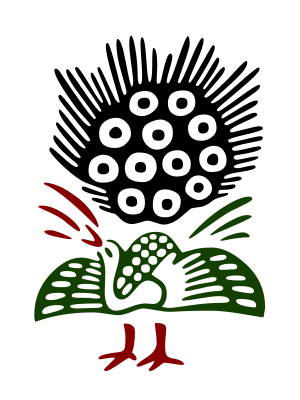
It is a tradition in most sets. The bird stands in for a single bamboo stick, and it counts as the 1 of bamboo in every way.
Can winds or dragons make a run?
No. Runs only come from the three numbered suits. Winds and dragons can make triplets, kongs and pairs.
Now you know the tiles. Sit down at a table.
Hong Kong, Singapore, Malaysian or Taiwanese rules. Invite friends with one link, and AI fills any empty seat. No download, no sign-up.
Keep reading
Spotted a mistake or have a question? Send feedback