Hong Kong Mahjong Rules and Scoring
The rules of Hong Kong (Cantonese) Mahjong, with the full faan table, the 3-faan minimum, flowers, payouts and how the deal moves around the table.
What is Hong Kong Mahjong?
Hong Kong Mahjong (香港麻雀), also called Cantonese Mahjong, is the four-player game played across Hong Kong, Guangdong and Cantonese-speaking communities around the world. Each player holds 13 tiles, draws and discards one tile a turn, and races to build a winning hand of four sets and a pair.
What sets the Hong Kong style apart is its scoring. Every winning hand is counted in faan (番), and under traditional rules a hand needs at least 3 faan before you may declare it. This page covers the full rules, the faan table and how the money changes hands. For a gentler first introduction, start with how to play Mahjong.

The tiles and the deal
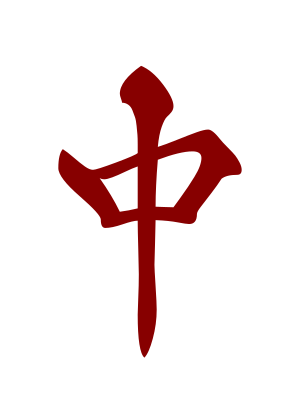
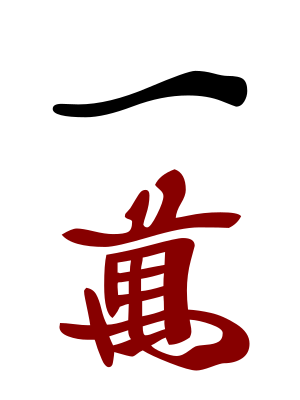
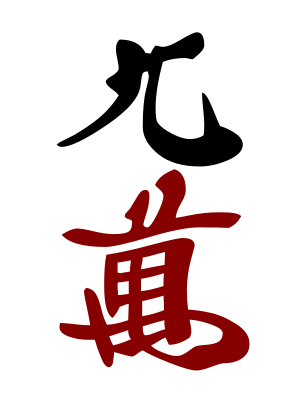
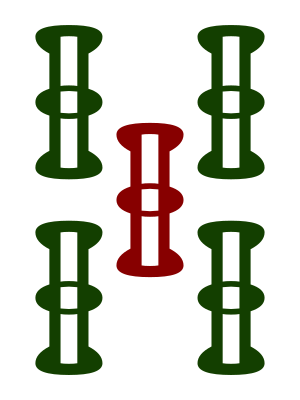
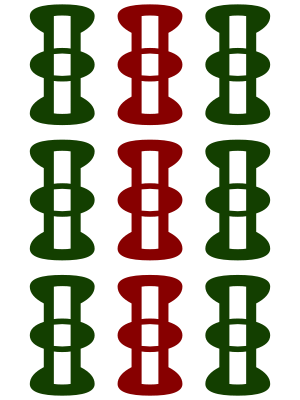
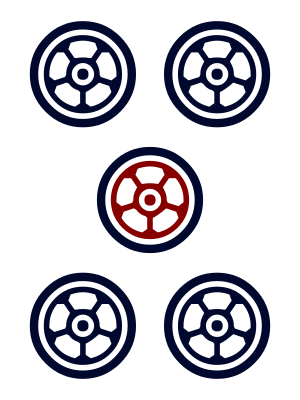
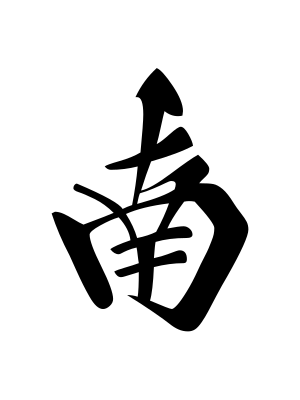
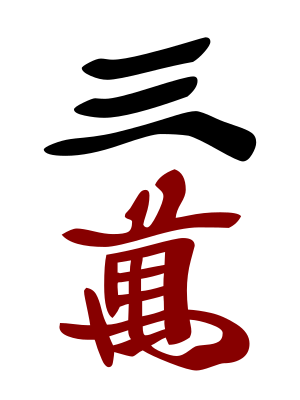
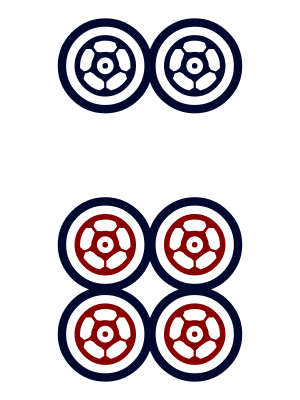
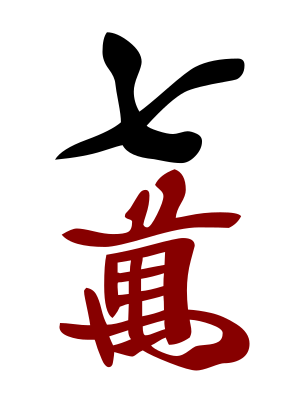
Hong Kong Mahjong uses 144 tiles. There are four copies of every tile in the three suits (characters, bamboo and dots, numbered 1 to 9), four copies of each wind and dragon, and one of each of the eight flowers and seasons. There are no animal tiles; those belong to the Singapore and Malaysian games.


- Everyone takes 13 tiles. Any flower or season in your deal is set face up beside you and replaced from the wall, so you always start with 13 playing tiles.
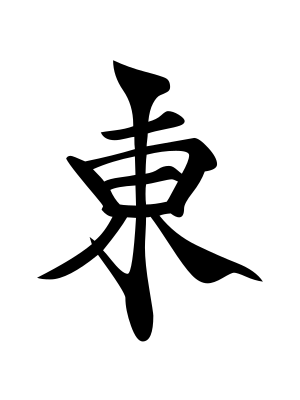
- The dealer is East and plays first. The dealer draws a 14th tile and discards. The other seats are South, West and North in turn order.
- Draw one, discard one. On your turn you draw from the wall, then throw one tile face up into the middle, ending your turn on 13 again.
- The hand ends with a win or an empty wall. If nobody completes a hand before the wall runs out, the hand is a draw.
Sets and claiming discards
A set is three or four tiles that belong together. A chow (上) is a run of three in one suit. A pung (碰) is three identical tiles. A kong (槓) is four identical tiles and counts as one set; whenever you make a kong you draw a replacement tile. The pair (眼) is two identical tiles.

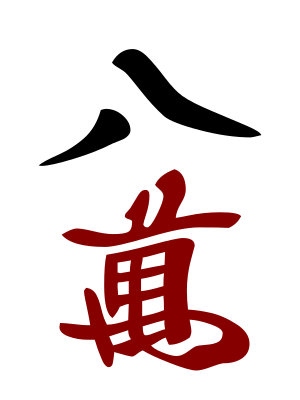
You can take the tile another player has just discarded to finish a set, then show that set face up. A pung, a kong or a winning tile can be claimed from anyone. A chow can only be claimed from the player before you, the one on your left. Play then continues from you, skipping anyone in between.
When several players want the same discard, a win beats a kong, a kong beats a pung and a pung beats a chow. Hong Kong rules allow more than one player to win on the same discard, and the discarder pays each winner in full.
Winning hands
A standard winning hand has 14 tiles made of four sets and a pair. Hong Kong rules also allow seven pairs (七對子), seven different pairs held in your hand with nothing exposed, and the special limit hand thirteen orphans (十三么).
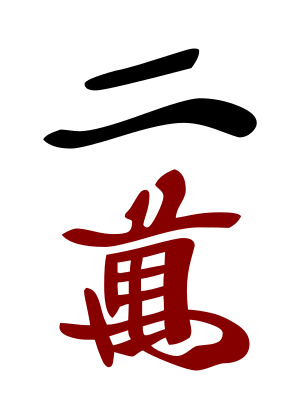
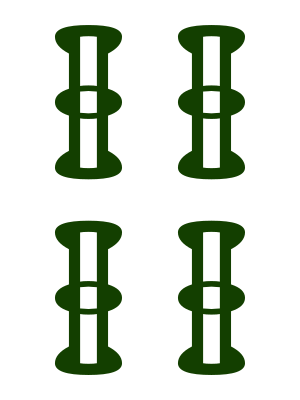
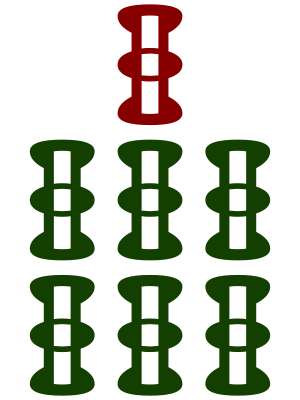
You can win in two ways. A self-drawn win (自摸) is when you draw the winning tile from the wall yourself. A discard win (食糊) is when you claim another player's discard to finish your hand. A self-drawn win scores an extra faan and changes who pays.
The Hong Kong faan table
Add up every pattern your hand contains. Under Hong Kong faan scoring you need at least 3 faan to win, and a hand's total is capped at 13 faan. A hand that reads more than one way, such as 111 222 333 as three pungs or three runs, is scored in whichever way gives more faan.
| Pattern | Faan | What it means |
|---|---|---|
| Self-drawn 自摸 | 1 | You drew the winning tile from the wall |
| Concealed hand 門前清 | 1 | No claimed sets and no kongs when you win (in our scoring a concealed kong also cancels this faan) |
| Common hand 平糊 | 1 | Every set is a chow |
| Seat wind pung | 1 | A pung or kong of your own seat's wind |
| Round wind pung | 1 | A pung or kong of the round's wind |
| Dragon pung | 1 | Each pung or kong of red, green or white |
| No flowers 無花 | 1 | You hold no flowers or seasons at all |
| Seat flower 正花 | 1 each | A flower or season that matches your seat |
| Full set of flowers or seasons | 1 more | All four flowers, or all four seasons |
| All triplets 對對糊 | 3 | Every set is a pung or kong |
| Half flush 混一色 | 3 | One suit plus honour tiles |
| Seven pairs 七對子 | 4 | Seven different pairs |
| Small three dragons 小三元 | 5 | Pungs of two dragons and a pair of the third |
| Full flush 清一色 | 7 | Every tile from one suit, no honours |
| Big three dragons 大三元 | 13 | Pungs or kongs of all three dragons |
| Small four winds 小四喜 | 13 | Pungs of three winds and a pair of the fourth |
| Big four winds 大四喜 | 13 | Pungs or kongs of all four winds |
| All honours 字一色 | 13 | Only winds and dragons |
| Nine gates 九蓮寶燈 | 13 | 1112345678999 in one suit, plus any tile of that suit |
| Thirteen orphans 十三么 | 13 | Every 1, 9, wind and dragon, plus a pair |
Small three dragons also scores its two dragon pungs, so it is worth at least 7 faan. Seven pairs and thirteen orphans do not add the concealed hand faan.
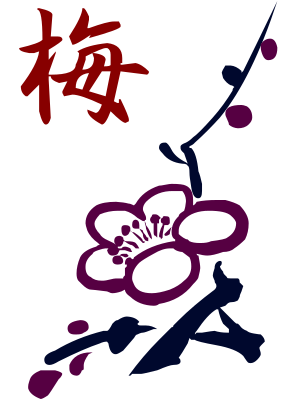
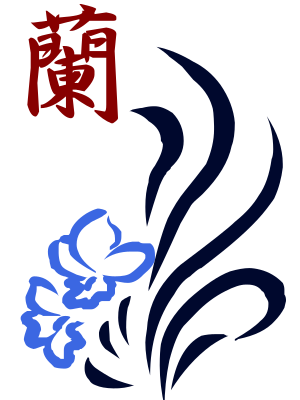
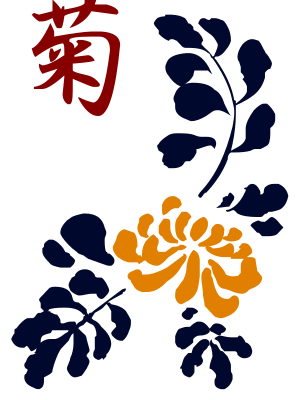
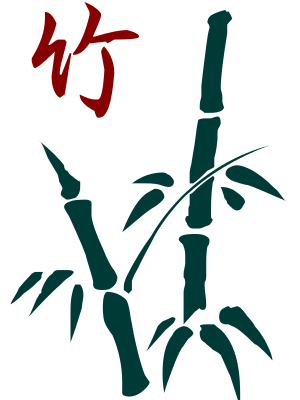
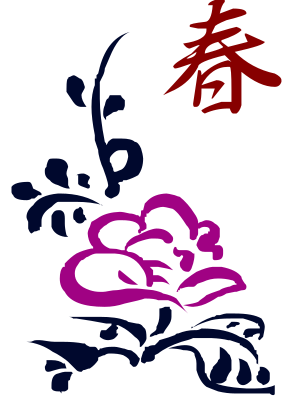
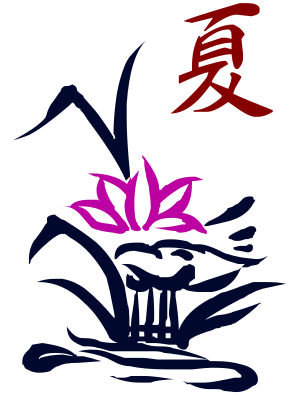
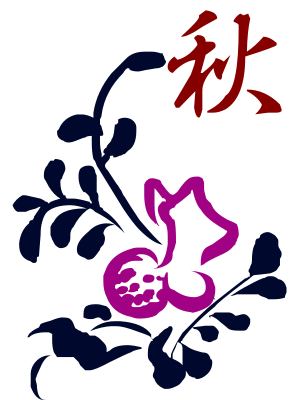
Flowers and seasons score only when they match your seat. East's tiles are plum and spring, South's are orchid and summer, West's are chrysanthemum and autumn, and North's are bamboo and winter. Each matching tile is worth 1 faan; the others are worth nothing. Collecting all four flowers or all four seasons adds 1 more faan on top, and holding no bonus tiles at all scores 1 faan.
Who pays and how much
Faan turn into a base amount that doubles at 3, 5, 7 and 10 faan. Anything above 10 faan pays the same as 10.
| Faan | Base | When the dealer pays or wins |
|---|---|---|
| 3 to 4 | 2 | 4 |
| 5 to 6 | 4 | 8 |
| 7 to 9 | 8 | 16 |
| 10 or more | 16 | 32 |
On a discard win, only the player who threw the winning tile pays. On a self-drawn win, all three opponents pay. Whenever the dealer is on either side of a payment, as the winner or as a payer, that payment is doubled.
For example, a non-dealer self-draws a 4-faan hand. The base is 2, so the two other non-dealers pay 2 each and the dealer pays 4, and the winner collects 8. If the same hand had won on a non-dealer's discard, that player alone would pay 2.
The dealer and wind rounds
The dealer sits East. If the dealer wins, they keep the deal for the next hand. If the wall runs out with no winner, the dealer also keeps the deal. When anyone else wins, the deal passes to the next player.
Once every player has dealt, the round wind moves on, from East to South, then West and North. A full match is four wind rounds. The round wind matters for scoring, because a pung of it is worth 1 faan.
Playing Hong Kong Mahjong here
Our Hong Kong tables use everything above: 144 tiles with flowers and seasons, 13-tile hands, chows only from your left, seven pairs, multiple winners and four wind rounds.
Scoring is casual by default. Any complete hand wins, with no faan to count, and each win scores a point. When you set up a private table you can switch the Scoring option to Hong Kong Faan, which uses the faan table, the 3-faan minimum and the payouts on this page.
Questions about Hong Kong Mahjong
How many faan do you need to win in Hong Kong Mahjong?
Three, under traditional Hong Kong faan scoring. On our casual scoring there is no minimum, so any complete hand wins.
Is Cantonese Mahjong the same as Hong Kong Mahjong?
Yes. Both names describe the same 13-tile game with flowers and faan scoring.
Can I chow from any player?
No. A chow can only be claimed from the player on your left. Pungs, kongs and winning tiles can be claimed from anyone.
What is the highest-scoring hand?
Limit hands such as thirteen orphans, big three dragons and big four winds count 13 faan. Payouts stop growing at 10 faan, so every limit hand pays the top amount.
Do flowers count if they are not my seat's?
No. Only the flower and season that match your seat score 1 faan each, unless you collect a complete set of four.
What happens if two players win on the same discard?
Both win. The player who discarded the tile pays each of them in full.
How is this different from Singapore or Taiwanese Mahjong?
Singapore adds animal tiles and counts tai, and Taiwanese Mahjong uses 16-tile hands. See Singapore Mahjong rules and Taiwanese Mahjong rules.
Ready for a hand of Hong Kong Mahjong?
Play casual or switch on Hong Kong faan scoring. Invite friends with one link, and AI fills any empty seat. No download, no sign-up.
Spotted a mistake or have a question? Send feedback