How to Play Mahjong
How four-player Mahjong is played, from the tiles to the winning hand, with the Hong Kong, Singapore, Malaysian and Taiwanese differences side by side.
What is Mahjong?
Mahjong (麻將) is a tile game for four players from China. Each player holds a hand of tiles, draws one tile and discards one tile every turn, and races to turn the hand into a complete winning shape: four sets and a pair.
Like rummy, you can take a discard, but in Mahjong any player may claim it to finish a set, not only the next player, and a claim changes the turn order. Most of the skill is in choosing what to keep, what to throw, and when to take a tile from someone else.


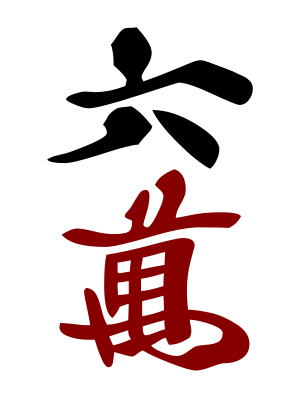
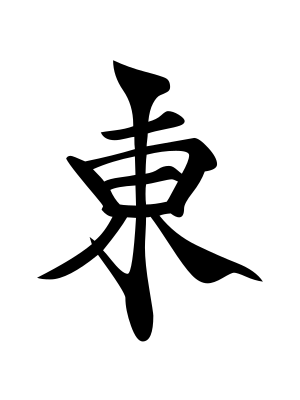
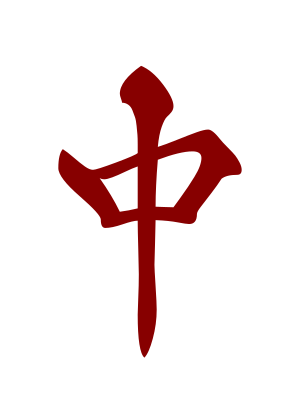
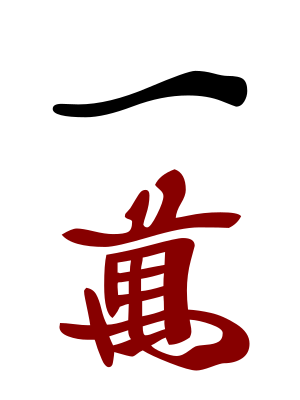
The tiles
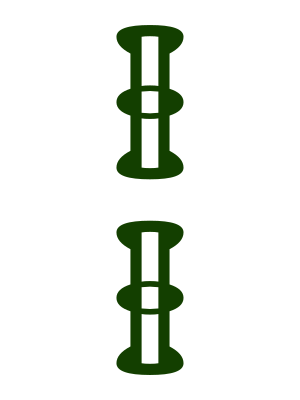
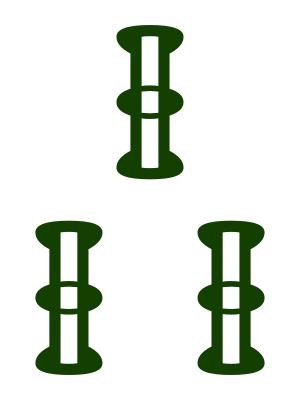
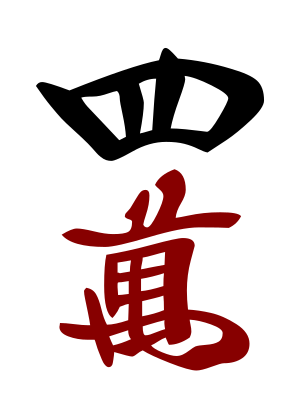
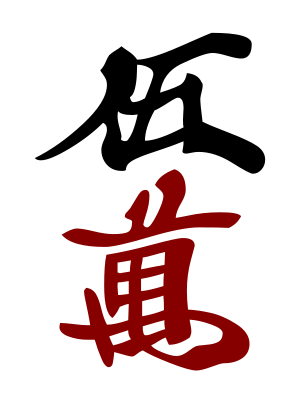
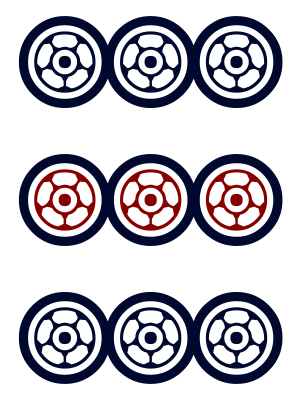
A Hong Kong set has 144 tiles: three numbered suits, the honour tiles, and eight bonus tiles. There are four copies of every suit and honour tile.
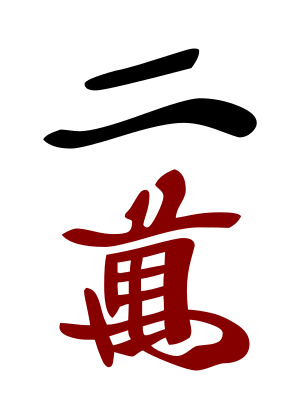
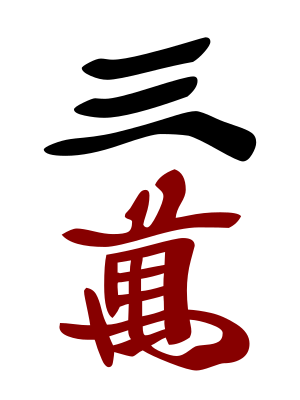
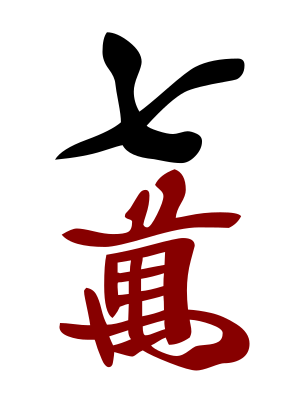
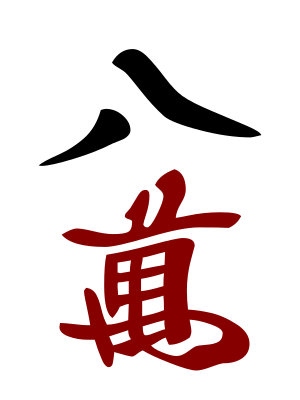
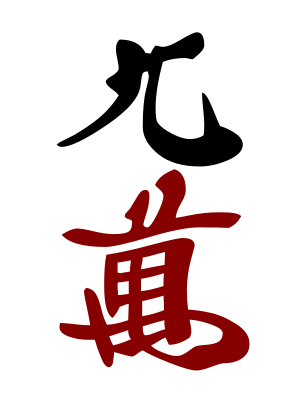
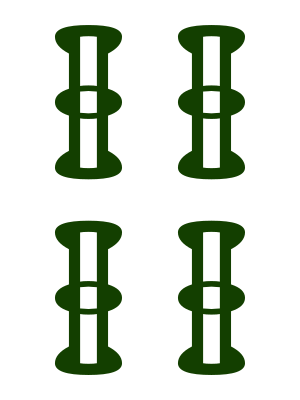
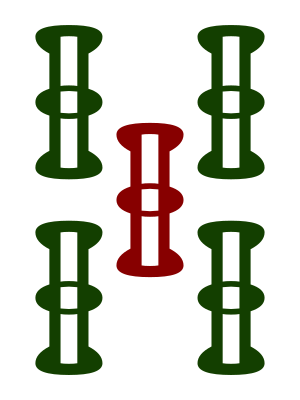
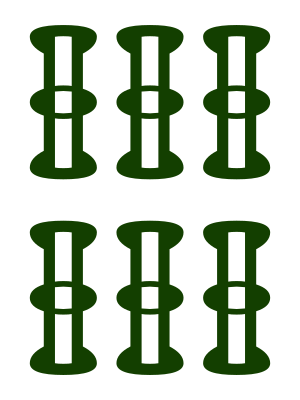
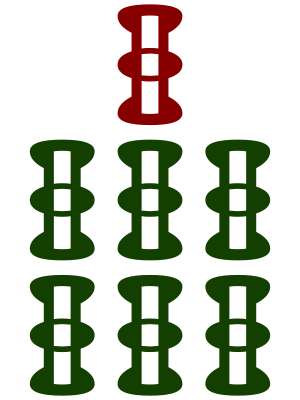
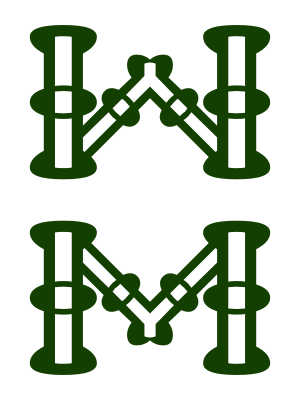
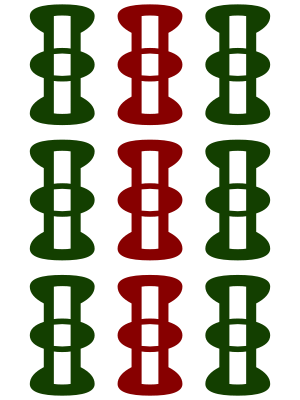

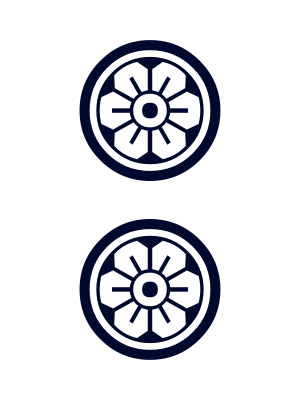

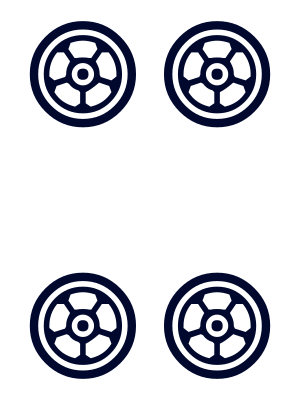
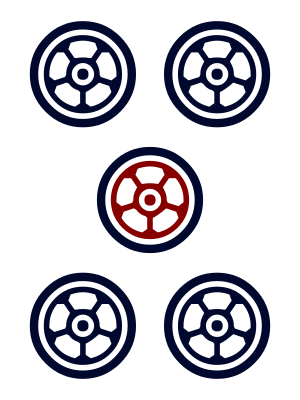
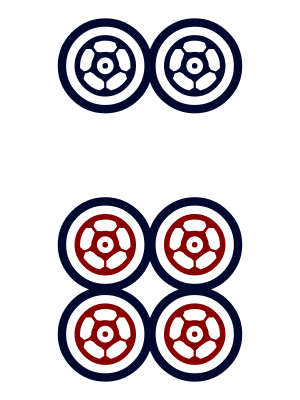
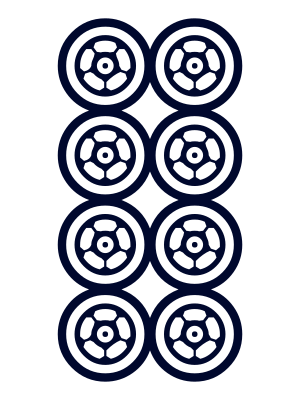
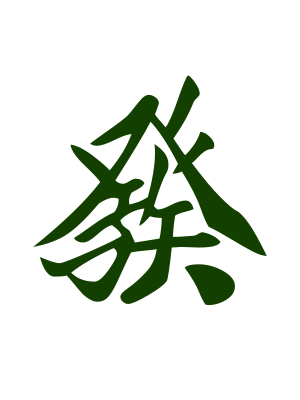
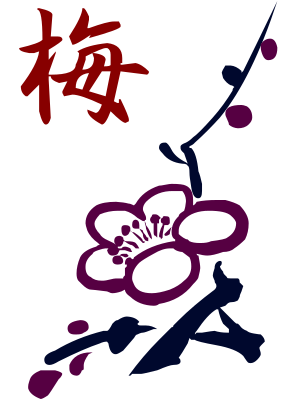

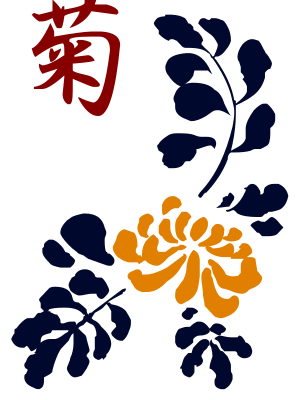





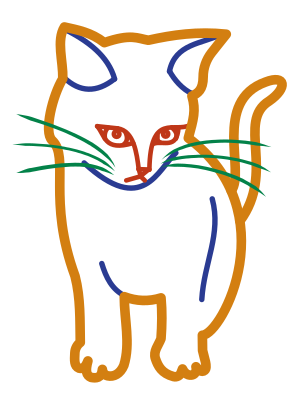
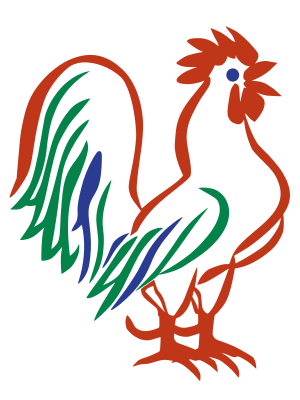
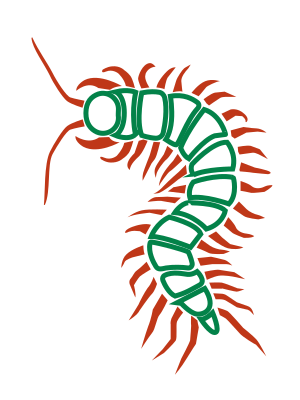
Singapore and Malaysian tables add four animal tiles (cat, rat, rooster and centipede) for 148 tiles in all. They work like flowers: set aside, then draw a replacement.

Sets and the pair
Every winning hand is built from three kinds of set, plus one pair called the eyes.
How a hand is played
- Everyone takes 13 tiles. Any bonus tiles in the deal go face up beside the player and are replaced from the wall. East, the dealer, goes first.
- Draw a tile, then discard a tile. On your turn you draw from the wall, so you hold 14, then throw one tile face up into the middle. You always end your turn back on 13.
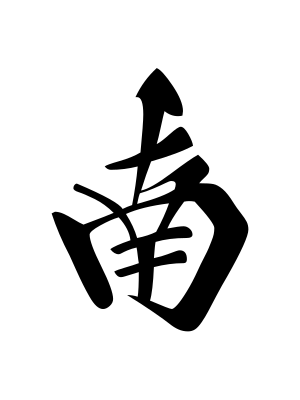
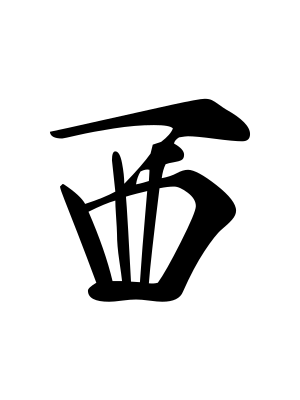
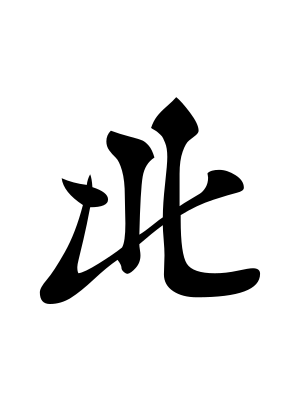
- Play passes around the table. East plays first, then South, West and North, and back to East.
- Anyone can claim the discard. If a discard completes a set or wins your hand, call it. You take the tile, show the set face up, discard, and play continues from you, skipping anyone in between.
- The hand ends with a win or an empty wall. The first player to complete a winning hand wins. If the wall runs out first, the hand is a draw.
Sets you make from a claimed discard are exposed: they sit face up in front of you and can't be changed. Sets you build from tiles you drew stay hidden in your hand.
When two players want the same tile
A discard can only go to one player, except for wins. When more than one player calls it, the stronger claim takes it, in this order: win, then kong, then pung, then chow. A pung call beats a chow call even though the chow player is next in turn.
If two or more players can win on the same discard, they all win.
Winning
You win when your 13 tiles plus one more make four sets and a pair. That last tile can come from the wall (a self-drawn win, 自摸) or from another player's discard. Call it as soon as you have it.
Seven pairs is a special winning hand in Hong Kong and Malaysian rules: seven different pairs, all from your own hand, with no sets. Singapore and Taiwanese rules don't allow it.
Scoring
Our tables start on casual scoring: any complete hand wins and scores a point, so new players can play without learning a points table. Each region also has its own scoring, which you can switch on when you set up a private table.
In regional scoring, a hand is worth faan (or tai) for the patterns it contains, and a hand needs a minimum to win at all. These are some common Hong Kong faan:
| Pattern | Faan | What it means |
|---|---|---|
| Self-drawn win | 1 | You drew the winning tile yourself |
| Concealed hand | 1 | No sets declared before your winning tile (a concealed kong also counts as declared) |
| All runs | 1 | Every set is a chow |
| Dragon pung | 1 | A pung or kong of any dragon |
| Seat or round wind pung | 1 | A pung of your own wind, or of the round's wind |
| All triplets | 3 | Every set is a pung or kong |
| Half flush | 3 | One suit plus honour tiles |
| Seven pairs | 4 | Seven different pairs |
| Small three dragons | 5 | Pungs of two dragons and a pair of the third |
| Full flush | 7 | Every tile from one suit, no honours |
| Thirteen orphans | 13 | One of each 1, 9, wind and dragon, plus a pair of any of them |
Hong Kong scoring needs at least 3 faan to win. The more faan, the more the losers pay. On a self-drawn win all three opponents pay; on a discard, the player who threw the winning tile pays.
Four regional rule sets
The tiles and the basic play are the same everywhere. These are the differences at our tables, and each region has its own page: Hong Kong, Singapore and Taiwan.
| Hong Kong | Singapore | Malaysia | Taiwan | |
|---|---|---|---|---|
| Tiles in hand | 13 | 13 | 13 | 16 |
| Tiles in the set | 144 | 148, with animals | 148, with animals | 144 |
| Seven pairs | Yes | No | Yes | No |
| Wind rounds in a match | 4 | 4 | 4 | 8 |
| Regional scoring | Faan, 3 to win | Tai, 1 to win | Fan, 1 to win | Tai, 1 to win |
| Who pays a discard win (regional scoring) | The discarder | Everyone, the discarder double | The discarder | The discarder |
Taiwanese Mahjong deals 16 tiles, so a winning hand needs five sets and a pair (17 tiles). Hands take longer to build, and a match runs twice as many wind rounds.
After the hand
If the dealer wins, they deal again. If anyone else wins, the deal passes to the next player. After a draw, the dealer deals again in Hong Kong and Taiwanese rules; in Singapore and Malaysian rules they keep the deal only if nobody declared a kong.
When every player has dealt, the round wind moves on from East to South. A match ends after the last wind round, and the player with the most points wins.
Questions new players ask
Is this Mahjong solitaire?
No. Mahjong solitaire is a one-player matching puzzle that uses the same tiles. This guide is the original four-player game, where you draw, discard, claim sets and race to a winning hand.
Can I win with any complete hand?
On casual scoring, yes. With regional scoring switched on, the hand also has to reach the region's minimum, such as 3 faan in Hong Kong.
Can I take a discard from anyone?
For a pung, a kong or a win, yes. For a chow, only from the player just before you.
What do I do with a flower tile?
Put it face up beside your hand and draw a replacement. Flowers never count as part of a set.
What happens if two players call the same tile?
A win beats a kong, a kong beats a pung, and a pung beats a chow. Two players who can both win on the tile both win.
What if we don't have four players?
Start anyway. AI players take the empty seats, so two or three friends can still play a full table.
You know the rules. Sit down at a table.
Hong Kong, Singapore, Malaysian or Taiwanese rules. Invite friends with one link, and AI fills any empty seat. No download, no sign-up.
Keep reading
Spotted a mistake or have a question? Send feedback